
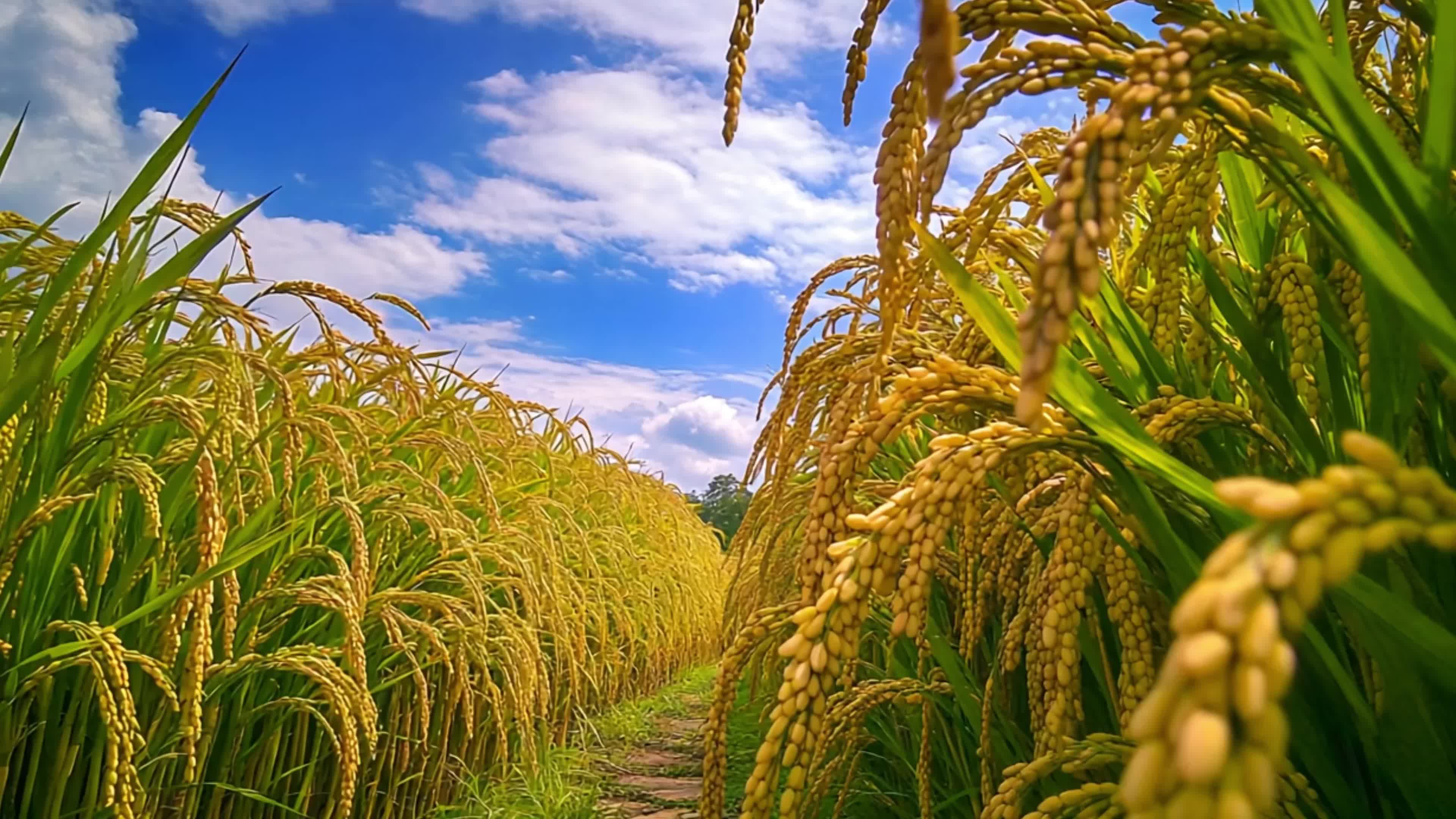
Precise fertilization is key to high yield and quality rice: base fertilizer stabilizes the roots, tillering fertilizer promotes plant growth, panicle fertilizer promotes large panicles, and grain-filling fertilizer ensures proper filling. Following the principle of "supplying on demand and fertilizing according to the time," every grain of fertilizer is used to maximize its effectiveness.
As one of the major food crops, the improvement of rice yield and quality is inseparable from scientific fertilization management. Precise control of the fertilization period directly determines the utilization rate of fertilizer nutrients, the growth and development process of rice, and the final production benefits. Throughout the rice's growth cycle, the demand for nutrients such as nitrogen, phosphorus, and potassium varies significantly at different growth stages. Only by following the principle of "supplying on demand and fertilizing according to the time" can the maximum fertilizer efficiency and the goal of high yield and quality rice be achieved.
I. Base Fertilizer: Laying the Nutritional Foundation for Rice Growth
Base fertilizer is the basic fertilizer applied before rice sowing or transplanting. Its core function is to supplement the soil with long-term stable nutrients, improve soil physical and chemical properties, and create a good nutrient environment for seed germination, seedling rooting, and early growth. The optimal time for applying base fertilizer is 3-5 days before transplanting (for transplanted rice) or 7-10 days before sowing (for direct-seeded rice). At this time, fertilization can be achieved by tilling the soil to ensure thorough mixing, preventing fertilizer burn from concentrated application and allowing nutrients to undergo initial conversion in the soil, facilitating rapid absorption by the rice after transplanting.
The key to base fertilizer application is "even and deep application." When fertilizing manually, the fertilizer should first be evenly spread on the field surface, then tilled mechanically or manually to incorporate it into the soil to a depth of 15-20 cm, ensuring complete integration. In mechanized planting fields, side-deep fertilization can be used, applying fertilizer 5-8 cm below and to the side of the seedlings during transplanting to reduce nutrient loss and improve utilization. It is important to note that if the soil has poor aeration or is waterlogged, avoid applying uncomposted organic fertilizer to prevent fermentation that produces harmful substances such as hydrogen sulfide, which can damage the rice roots.
II. Tillering Fertilizer: Promoting Effective Tillering and Building a High-Yield Population
The tillering stage is a crucial phase in rice's transition from vegetative to reproductive growth. The core objective of fertilization during this stage is to promote the germination of effective tillers, control ineffective tillers, and build a reasonable population structure, laying the foundation for subsequent panicle formation. The optimal application time for rice tillering fertilizer is divided into two stages: "early application of tillering-promoting fertilizer" and "skillful application of tiller-protecting fertilizer." This should be applied flexibly according to the rice's growth progress and field conditions. If drought occurs, irrigation should be done before fertilization to ensure fertilizer dissolution and absorption.
III. Panicle Fertilizer: Focusing on Larger Panicles and More Grains, Improving Grain Filling Rate
The panicle stage is the core stage of rice's reproductive growth, encompassing jointing, booting, and heading processes. Fertilization during this stage directly affects panicle length, number of grains per panicle, grain filling rate, and thousand-grain weight, making it a "critical blow" in determining yield. The optimal application time for panicle fertilizer needs to be precisely determined. It is divided into "flower-promoting fertilizer" and "flower-protecting fertilizer," and applying both together can achieve the goal of "larger panicles, more grains, and heavier grains."
In case of waterlogging, the field should be drained and allowed to dry promptly to prevent root hypoxia from affecting nutrient absorption.
IV. Grain Fertilizer: Promotes Grain Filling and Improves Quality. The grain filling stage is the period from heading to maturity in rice. The goal of fertilization at this stage is to prolong the functional period of leaves, enhance photosynthesis, promote grain filling, reduce empty grains, and improve grain plumpness and quality. The optimal application time for grain fertilizer is 5-7 days after the rice has fully headed, when the rice begins to enter the grain filling stage and needs additional nutrients to meet the needs of grain development.
Grain fertilizer mainly consists of fast-acting fertilizers and can be applied through a combination of foliar spraying and root fertilization. For root fertilization, apply 1-2 kg of urea and 2-3 kg of potassium chloride per mu (approximately 0.067 hectares). If the rice is weak and the leaves are prematurely senescent, the dosage can be increased appropriately. If the growth is vigorous and the leaves are dark green, only potassium fertilizer or no fertilizer may be applied to avoid excessive vegetative growth and delayed maturity. Foliar spraying is more flexible and efficient. Use a 0.2%-0.3% potassium dihydrogen phosphate solution, a 1%-2% urea solution, or micronutrient fertilizers (such as boron or zinc fertilizer), applying 50-60 kg per mu, once every 7-10 days, for 2-3 consecutive applications. This can effectively delay leaf senescence, improve photosynthetic efficiency, and promote grain filling.
For granular fertilizer application, pay attention to "small amounts, multiple times" to avoid excessive vegetative growth. If the leaves turn yellow and fall off prematurely after heading, it indicates insufficient nutrients, and granular fertilizer should be applied promptly. If the leaves are dark green and maturity is delayed, fertilization should be stopped and the field should be appropriately sun-dried to promote maturity. In addition, if the grain filling stage is accompanied by low temperatures and rain, the amount of nitrogen fertilizer should be reduced and foliar spraying should be increased to prevent disease. If the weather is sunny, the amount of fertilizer can be increased appropriately to improve the grain filling speed.