
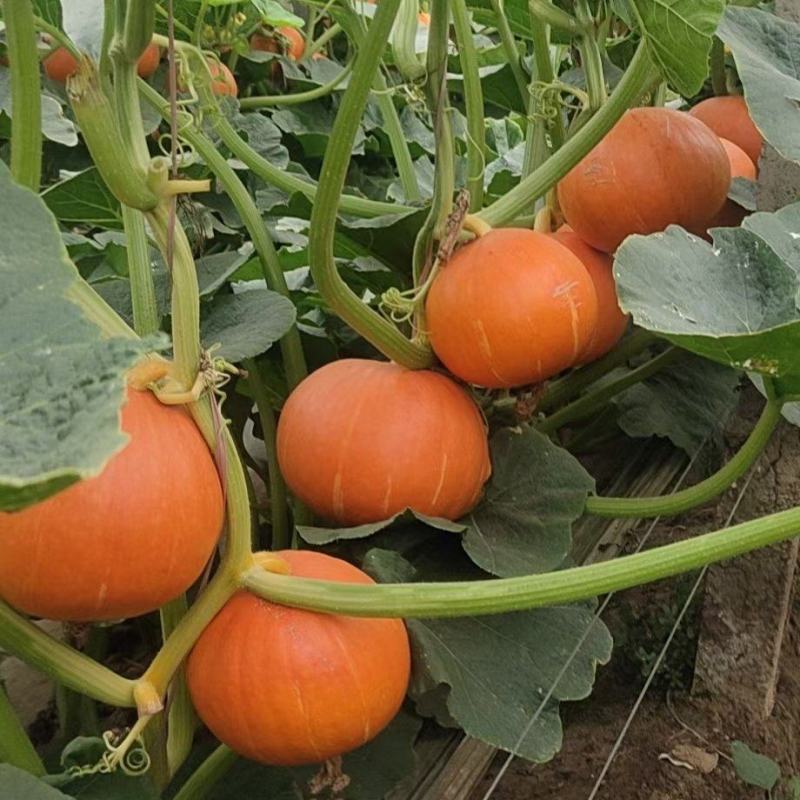
Pumpkins are not particularly demanding in terms of soil requirements, as everyone knows, and can even grow in relatively poor soil. However, planting pumpkins in heavy but fertile soil can easily lead to flower and fruit drop, resulting in low yields. Therefore, early-maturing pumpkin varieties are best suited to deep, well-drained, and rapidly warming sandy loam soil. When soil fertility is sufficient, reasonable planting density is necessary, along with timely pruning, vine training, and topping to fully utilize the nutrients and achieve high yields.
Furthermore, the amount and proportion of nutrients absorbed by pumpkins vary at different growth and development stages. It is understood that pumpkins require large amounts of nitrogen and potassium, followed by calcium, phosphorus, and magnesium. The absorption characteristics at different growth stages are as follows: nitrogen absorption is slow in the early fruiting stage, gradually increasing, and then increases sharply during the fruit enlargement stage; phosphorus absorption is relatively stable; potassium absorption is similar to nitrogen absorption, but particularly prominent during the fruit enlargement stage; calcium absorption gradually increases in the early fruiting stage, with an absorption amount similar to nitrogen and potassium, but less in the later stages; magnesium absorption is similar to phosphorus absorption before and during fruiting.
Correct Fertilization Methods for Pumpkins
1. Early Heavy Base Fertilizer Application: Before transplanting, deeply till the soil to a depth of about 30 cm. During deep tillage, apply 7500 kg of well-rotted organic fertilizer per hectare. After fertilization, level the soil and make raised beds. The planting density should be approximately 4000 plants per hectare.
2. Mid-Stage Fruit-Promoting Fertilizer Application: After the pumpkin seedlings emerge from transplanting, top-dress according to the growth of the seedlings. If the seedlings are weak, apply a growth-promoting fertilizer along with irrigation water, about 4000 kg of manure water per hectare. After fruit setting, apply a fruit-promoting fertilizer, about 2000 kg of manure water per hectare. In case of hot and dry weather, apply 300 kg of compound fertilizer along with irrigation water to promote pumpkin fruit enlargement.
3. Late-Stage Fertilization
In the later stages of pumpkin growth, to prolong the plant's growth period, increase yield, and prevent premature aging of the vines, a small amount of organic fertilizer can be applied to support its continued growth. It is recommended to spray the pumpkin leaves with a 0.2% solution of potassium dihydrogen phosphate to increase the fruit setting rate. Spray once a week for three consecutive weeks.
In short, the amount of fertilizer applied to pumpkins needs to be determined based on their growth and soil nutrients. Growers should judge the growth status of the pumpkins and take appropriate fertilization measures to achieve high yields and increased income.