
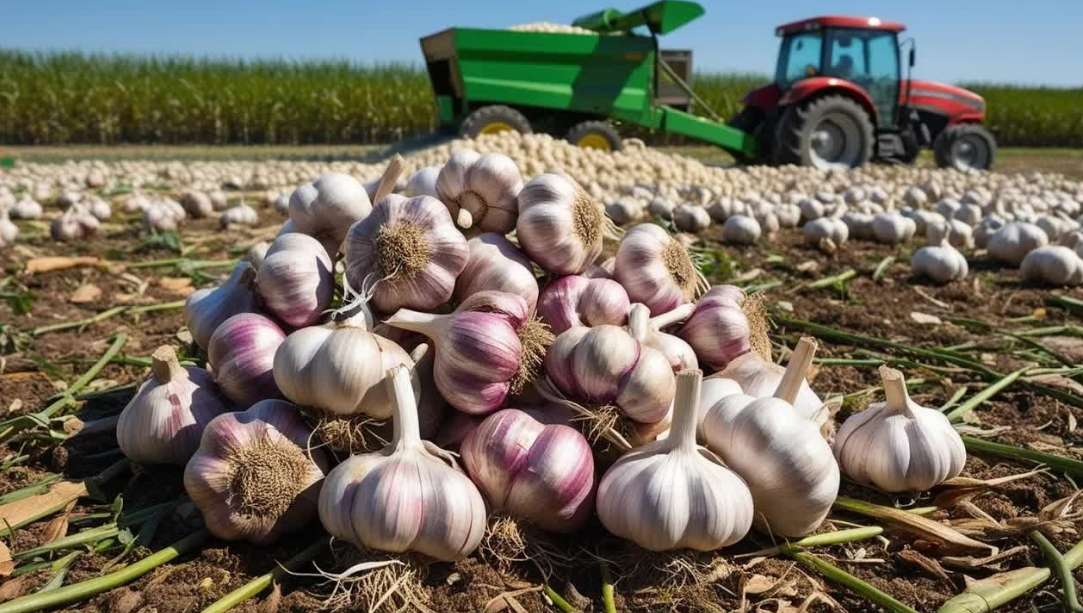
Garlic, as an important cash crop in agricultural cultivation, has a yield and quality directly impacted by fertilization techniques. Scientific and appropriate fertilization methods can not only enhance garlic's stress resistance but also significantly improve its yield and quality.
1. Basal Fertilizer Application
Basal fertilizer application for garlic is essential for ensuring nutrient supply throughout the growing season. Organic fertilizer should be the primary fertilizer, supplemented with chemical fertilizers to meet garlic's comprehensive nutrient needs.
1. Selection and Application of Organic Fertilizer
In addition to applying organic fertilizer, a certain amount of chemical fertilizer should also be applied to supplement garlic's needs for key nutrients such as nitrogen, phosphorus, and potassium. Common chemical fertilizers include superphosphate, nitrogen-phosphorus compound fertilizers, and nitrogen-potassium compound fertilizers.
2. Trace Element Supplementation
In addition to key nutrients such as nitrogen, phosphorus, and potassium, garlic also requires appropriate amounts of trace elements such as boron, magnesium, and calcium during its growth. These elements play an important role in garlic's growth, development, and quality. For example, a lack of boron can cause garlic plants to stagnate, with new leaves turning yellow or even dying. A lack of phosphorus can reduce leaf count, plant height, and garlic yield. A lack of potassium can impair garlic bulb expansion and lead to disease. Therefore, during fertilization, appropriate amounts of trace element fertilizers should be added based on the garlic's growth and soil test results.
III. Fertilization Precautions
1. Ensure that organic fertilizers are fully decomposed: Undecomposed organic fertilizers can burn roots and introduce pests and diseases.
2. Control the amount of chemical fertilizers used: Excessive application of chemical fertilizers can inhibit garlic growth and affect yield and quality.
3. Combine fertilization with irrigation: Prompt irrigation after fertilization promotes root absorption and nutrient utilization.
4. Fertilize according to soil conditions: Different soil types have different nutrient content and nutrient retention capacity, so a fertilization plan should be developed based on soil test results.
5. Foliar fertilization as a supplement: Foliar fertilization during the critical growth period of garlic can quickly replenish nutrients and promote growth.
In short, garlic fertilization is a complex and meticulous process. Growers need to fully understand the crop's growth characteristics and soil conditions, develop a scientific and rational fertilization plan, and implement it carefully. Only in this way can we ensure the healthy growth, high yield, and high quality of garlic.