
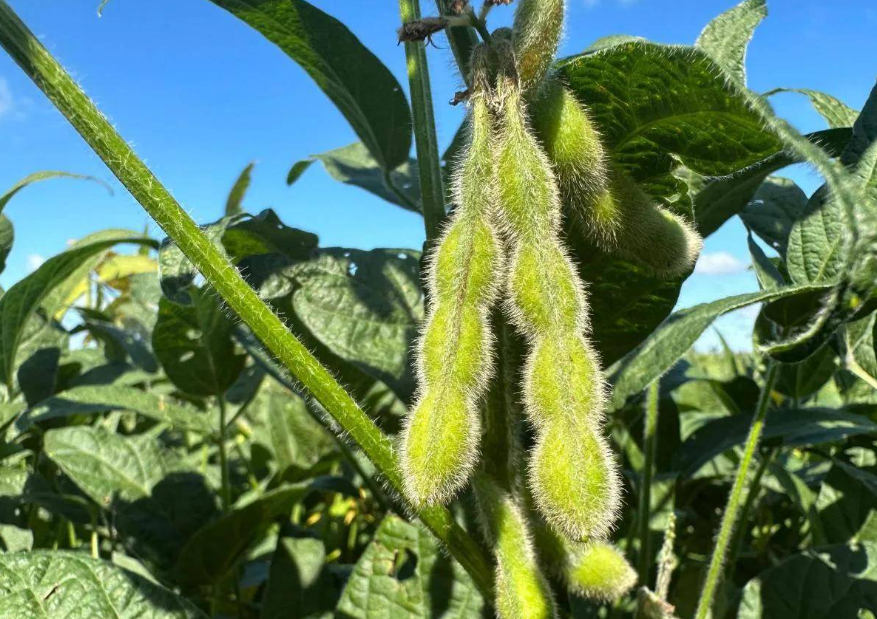
Soybeans are a crop rich in plant protein with high market demand. Therefore, they attract many farmers to grow them. Gengzhongbang provides detailed information on soybean fertilization techniques to help soybean farmers cultivate soybeans more effectively.
I. Skillful Application of Nitrogen Fertilizer
The nitrogen-fixing function of soybean rhizobia gradually develops during the symbiotic relationship between soybean rhizobia and soybeans. It plays a crucial role in meeting the nitrogen nutrition needs of soybeans during their vigorous growth phase. Therefore, the rational application of nitrogen fertilizer during the soybean seedling stage is essential for improving the nitrogen-fixing capacity of rhizobia, promoting vigorous soybean growth, and laying a solid foundation for high soybean yields.
Currently, there are problems with excessive and unbalanced application of urea in soybean production. Soybeans have a comprehensive requirement for nitrogen, phosphorus, and potassium nutrients. Especially in high-yield and high-efficiency production, the plant must provide the rhizobia with relevant nutrients such as phosphorus, potassium, calcium, iron, and molybdenum. The nitrogen nutrient level of soybean plants should not be too high, because a high nitrogen level will inevitably consume more carbohydrates, reducing the number and size of root nodules, weakening nitrogen fixation capacity, and inhibiting the activity of soybean rhizobia, thus reducing the number of effective root nodules on the main root. Therefore, in soybean production, the amount of nitrogen fertilizer should generally not exceed 5 kg/mu of pure nitrogen, and nitrogen fertilizer should only be applied as base fertilizer.
II. Heavy Application of Phosphate Fertilizer As an oilseed crop, soybeans require a relatively high amount of phosphorus nutrition and are a phosphorus-loving crop. Sufficient phosphorus fertilizer supply plays an important role in ensuring normal soybean growth and increasing soybean yield. Therefore, sufficient phosphorus fertilizer should be applied in soybean cultivation. Phosphorus promotes root nodule development, achieving a "phosphorus-enhanced nitrogen" effect. In the early stages of growth, phosphorus mainly promotes root growth; before flowering, phosphorus promotes the growth of stems, leaves, branches, and other vegetative parts. Sufficient phosphorus supply during flowering can shorten the formation process of reproductive organs; insufficient phosphorus significantly increases flower and pod drop. When the supply of phosphorus in the soil is insufficient, soybean root nodules can invade the roots, but nodules will not form. Molybdenum fertilizer is an essential micronutrient for nitrogen fixation in root nodules. However, in phosphorus-deficient soils, applying molybdenum fertilizer alone can actually reduce root nodules. Phosphorus plays a crucial role in the synthesis of amino acids in root nodules and the transfer of soluble nitrogen from root nodules to other parts of the plant. Therefore, applying phosphate fertilizer is particularly effective in increasing yields when planting soybeans or other legumes. Phosphate fertilizer has low mobility in the soil and is easily adsorbed and fixed. Therefore, it is best to mix phosphate fertilizer with organic fertilizer, compost it, and then apply it using concentrated methods such as furrow application or hole application.
III. Rational Application of Potassium Fertilizer
Potassium is also one of the main nutrients required by soybeans. Potassium content in the soil is generally high, but in agricultural production, there is often a tendency to emphasize nitrogen and phosphorus while neglecting potassium application, resulting in less or no potassium fertilizer application and a relative deficiency. This is especially evident in high-yield cultivation. Potassium fertilizer application plays an important role in improving crop resistance and preventing premature aging.
In black soils with an organic matter content generally below 4%, applying an appropriate amount of potassium fertilizer in addition to a certain amount of nitrogen, phosphorus, and organic fertilizer significantly increases soybean yield. Potassium fertilizer application to soybeans is affected by both drought and excessive rainfall conditions. In dry years, potassium fertilizer application improves the drought resistance of soybeans; potassium contributes more to soybean yield increase in areas with higher accumulated temperature than in areas with lower accumulated temperature; in soils with low organic matter content (2%), the effect of potassium fertilizer increases with increasing nitrogen and phosphorus fertilizer application, depending on the ratio of nitrogen, phosphorus, and organic fertilizer. High levels of nitrogen and phosphorus fertilizer input, without potassium fertilizer application or with insufficient potassium supply, severely affect the yield-increasing effect of nitrogen and phosphorus fertilizers. Conversely, when nitrogen and phosphorus fertilizer inputs are low, the yield-increasing effect of potassium fertilizer cannot be fully realized. There is a clear positive interaction between nitrogen, phosphorus, and potassium fertilizers. For areas with moderate or low soil fertility, balanced nitrogen, phosphorus, and potassium fertilization must be implemented to obtain higher soybean yields.
IV. Pay Attention to the Application of Micronutrients
In current agricultural production, the micronutrients that have the most significant impact on soybean growth, development, and yield are molybdenum, zinc, and boron. Molybdenum can promote nitrogen fixation by soybean rhizobia and meet the nitrogen nutrition needs of soybeans; while zinc and boron can increase the seed setting rate. The application of molybdenum, zinc, and boron can increase soybean yield.