
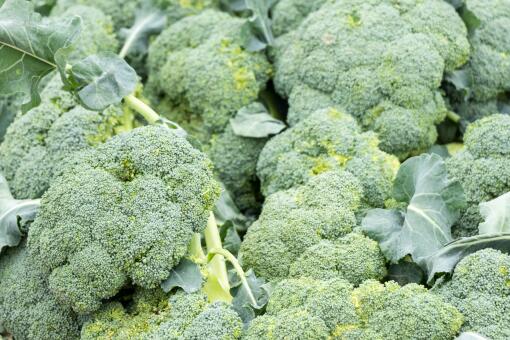
Base fertilizer: Before planting broccoli, apply base fertilizer, primarily organic fertilizer, supplemented with appropriate amounts of compound fertilizer, urea, and phosphorus-potassium fertilizer.
Seedling fertilizer: Seven days after transplanting, when the seedlings have developed new roots and leaves, apply seedling fertilizer, mainly potassium fertilizer.
Growth fertilizer: Twenty days after transplanting, to promote better growth and early budding, apply growth fertilizer, preferably compound organic fertilizer.
Budding fertilizer: When broccoli begins to bud, apply fertilizer containing nitrogen, phosphorus, and potassium, with increased potassium fertilizer application. This can be done through foliar spraying or root application.
Late-stage fertilization: After harvesting, apply fertilizer containing nitrogen, phosphorus, and potassium, which is very effective in improving yield and quality. Foliar fertilizer can also be sprayed appropriately.
Micronutrients: Among micronutrients, broccoli requires boron and molybdenum. Producing 1000 kg of broccoli requires 2.5 kg of pure nitrogen, 1.1 kg of phosphorus pentoxide, and 2.9 kg of potassium oxide.
In conclusion, the rational use of various fertilizers is crucial for ensuring healthy growth and increasing yield in broccoli cultivation. It is important to note that the principle of appropriate dosage should be followed during fertilization, and the fertilization plan should be adjusted according to the actual situation.